How Teachers Re-design Modules for Service-Learning Impact

“Every module can incorporate service-learning…”

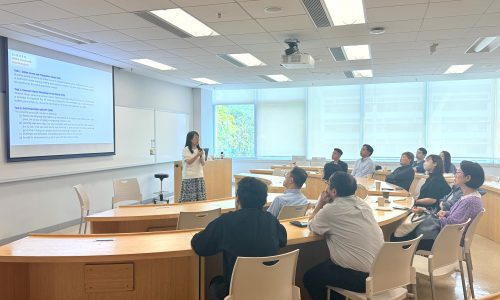
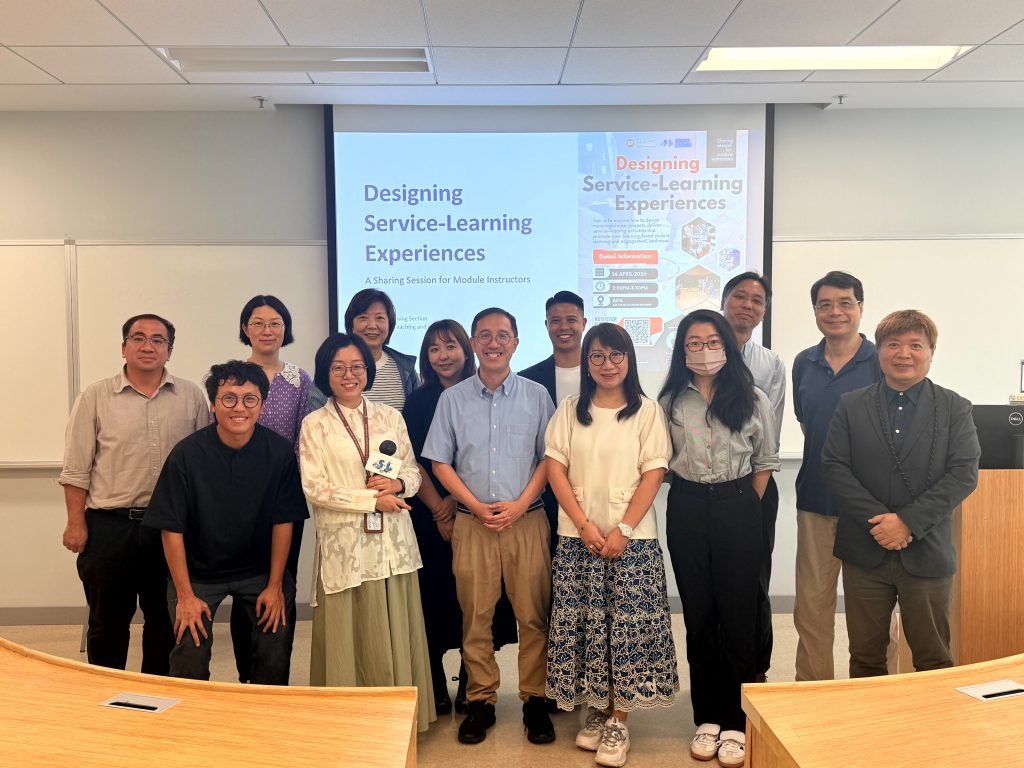
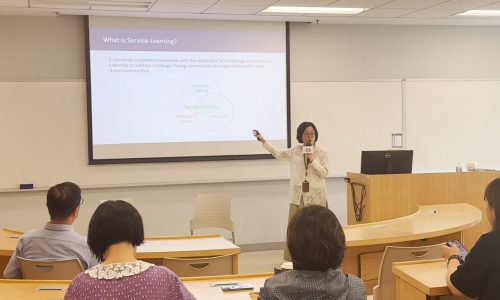
Organised by the Service-Learning Section of the Centre of Teaching and Learning, more than 10 HSUHK teachers and staff gathered April 16 for “Designing Service-Learning Experiences Sharing Session” a workshop that blended theory, proven case studies, hands-on module design, and interactive exercises.

Dr. Victor Chan, Associate Director (Service Learning), Centre for Teaching and Learning, opened directly: “Every module can incorporate service-learning.” He empowered attendees to reimagine their module through this lens.

20260416_0607160002
20260416_063505034_iOS

Pedagogy’s Dual Core
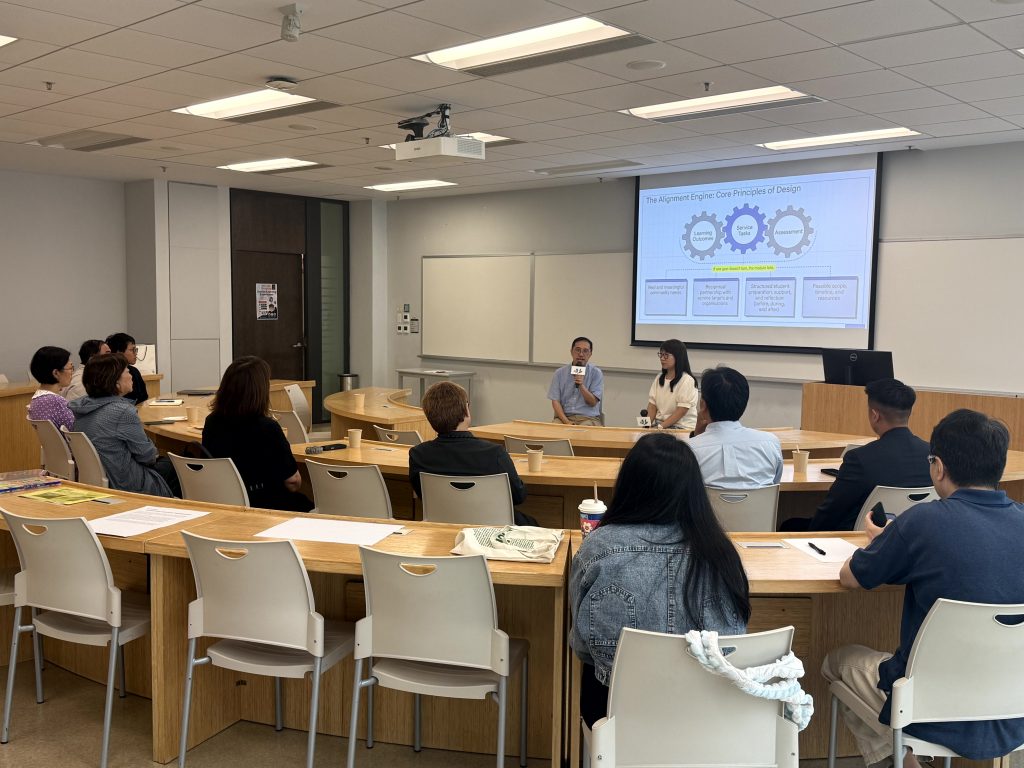
Ms Waii Yip, Executive Officer  Service Learning Section of the CTL, Ms. Waii Yip unpacked the essentials: “Service and learning are equally vital.” She detailed community engagement addressing real needs, with reflection as the key—students analyse experiences via presentations and reports, turning action into insight. She showed specific examples of successful service-learning, from retiree finance workshops to cultural heritage projects.

Case Study Spotlight
Ms Rosalie Woo, Senior Lecturer in the Department of Economics and Finance, then showcased her service-learning project in FIN1001: Personal Finance and Society. Now in its fifth year, The module pairs financial theory with community outreach. Ms Woo walked attendees through its evolution: early challenges with unsatisfied student works, resolved through clear instructions and ChatGPT training for sharper student deliverables.
Hands-On Innovation
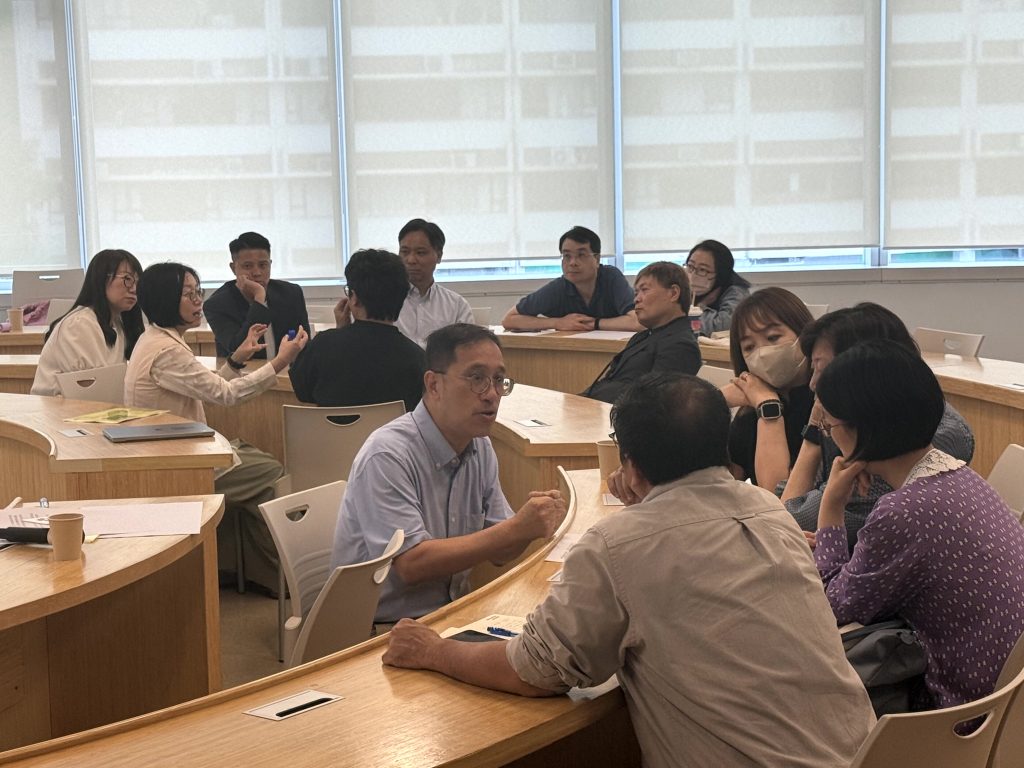
The session closed with a mini-workshop of voice and movement exercises, inspired by Dr Victor Chan, Ms Rosalie Woo and Ms Waii Yip: “I feel energised teaching Service-Learning when…” and “The biggest question for my students is…”. One noted, “When community feedback loops back—that’s true engagement.”

Positive feedback poured in, fueling calls for next year: Interactive strategies to integrate Service-Learning, fostering empathy, community ties, and transformative learning.